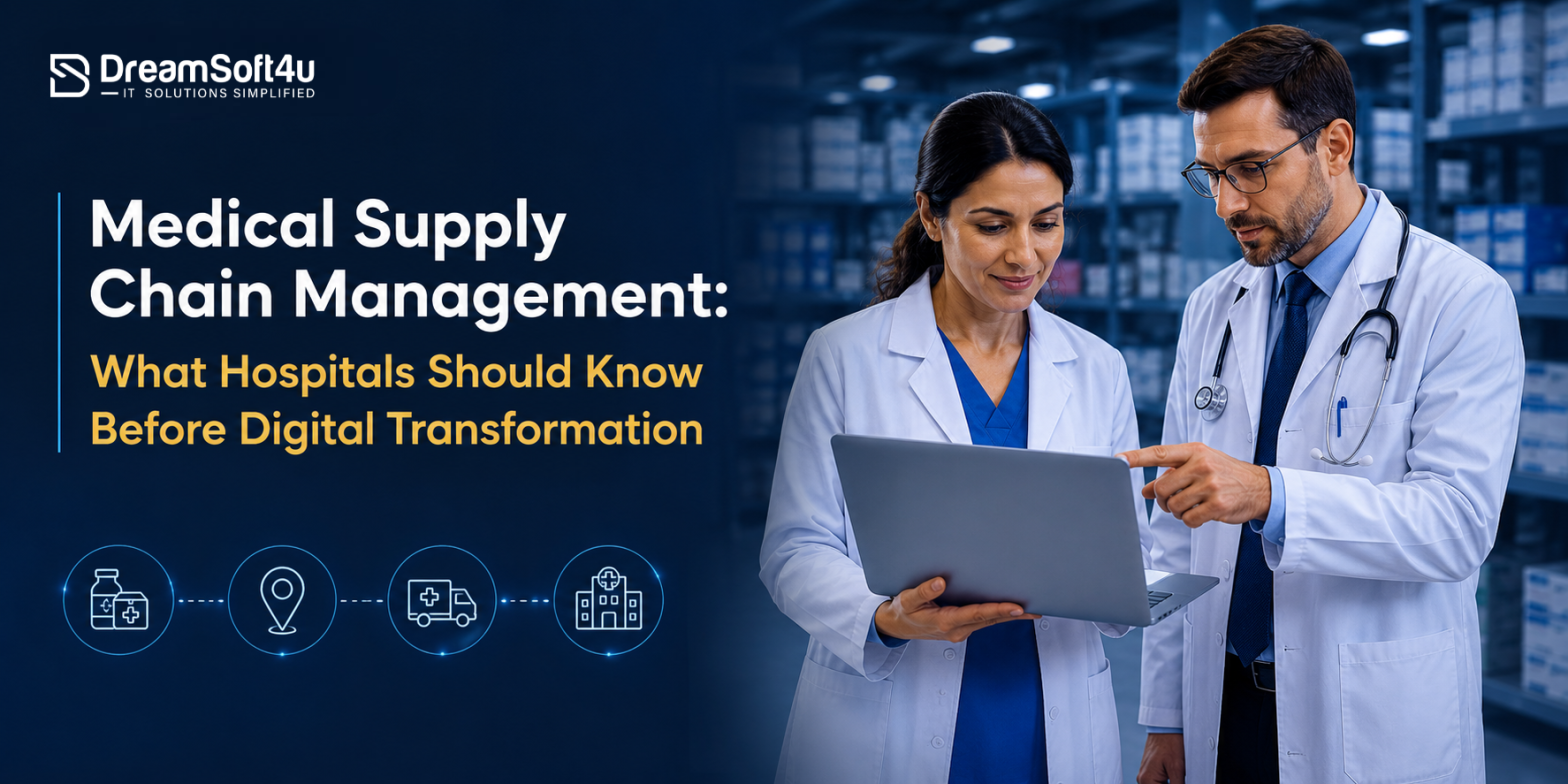
A hospital can have the best doctors and advanced medical equipment, yet still lose time, money, and efficiency because of a poor supply chain. Missing inventory, delayed deliveries, manual procurement, and disconnected systems can increase costs, disrupt patient care, and make day-to-day operations harder than they should be. That is why medical supply chain management… Continue reading Medical Supply Chain Management: What Hospitals Should Know Before Digital Transformation
Book Free Consultation
Share your requirements and our experts will contact you shortly
EPIC EMR Integration
Working with DreamSoft4u was a great experience. The team was highly responsive and professional. They not only understood our needs but also suggested the best possible options to enhance our project’s reach. Extremely satisfied with their work and looking forward to more collaborations!

– Rick Tran
Healthcare IT Solutions (MRCS)
I am completely satisfied with the work delivered by DreamSoft4u. They provided exactly what I expected – a high-quality, custom solution at budget-friendly pricing. The team is skilled, experienced, and highly recommended.

– Kem Tolliver
Custom Healthcare Software (Cyomed)
Choosing DreamSoft4u for my custom healthcare software solution was the right decision. They have deep expertise and a team of experienced developers who delivered exactly what we needed. I highly recommend DreamSoft4u for any healthcare software or mobile app development project.

– Michel J. Kaldesh
Telemedicine App Development (Sniffle)
The DreamSoft4u team is extremely knowledgeable in telemedicine app development. They delivered the project exactly as expected, ensuring smooth functionality and compliance. I highly appreciate their work and recommend them as the best telemedicine app development company.

– Rich Blanton
EMR-EHR-PHR Solution (SmartDocs)
DreamSoft4u delivered exceptional quality at a cost-effective price. They efficiently managed frequent change requests and bug reports during development while maintaining a professional and polite approach. Their dedication and commitment are highly commendable.

– Nino Gorgia
mHealth App Development (Intouch EMR)
With DreamSoft4u’s 23+ years of healthcare software expertise, I entrusted them with my mHealth app project. They exceeded expectations by delivering a best-in-class solution ready to compete in the market—all within budget and with a faster time to market.

– Nitin Chooda
Generative AI
DreamSoft4u’s expertise in Generative AI transformed our product vision into reality. Their advanced AI solutions delivered highly accurate, scalable, and lightning-fast performance. We’ve seen remarkable growth in user engagement and operational efficiency. A truly innovative and forward-thinking team!

– Kenji Yamamoto
USA
USA
Digital Transformation Solutions
We partnered with DreamSoft4u for our digital transformation needs, and it was the best decision we could have made. Their team streamlined our processes, modernized our legacy systems, and delivered innovative solutions that exceeded our expectations. Truly a reliable technology partner!

– Mark Reynolds
CTO
CTO