






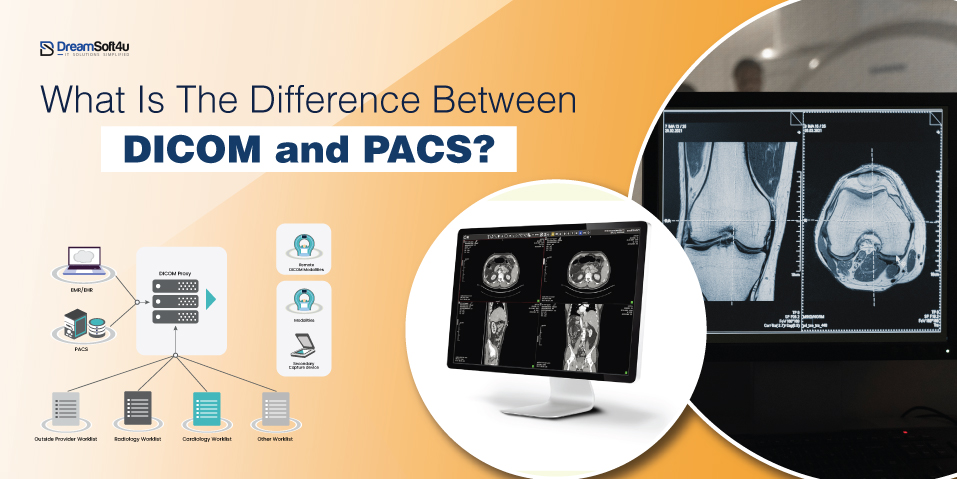
Healthcare experts utilize a sequence of jargon to convey themselves, without any surprise in it. People from different industries communicate with each other. This instance is better acknowledged by the folks working in radiology. They require some terms that should be specific to their working hemisphere. DICOM and PACS are such terminologies. So, what is the difference between DICOM and PACS? The post here conveys all these questions in-depth.
In the present day, the utilization of scientific techniques like X-ray, CT (computer tomography) Scanners, MRI, etc. collects enormous amounts of data. Humans are not that capable of understanding the terminology, thus, DICOM and PACS come into play. These decode the entire information for human understanding. Now, How? This would be understood better with the below context.
Quick Answer: DICOM (Digital Imaging and Communications in Medicine) is the international standard that formats and transmits medical images. PACS (Picture Archiving and Communication System) is the software infrastructure that stores, retrieves, and displays those DICOM-formatted images. In short: DICOM is the language, PACS is the library that uses it.
DICOM vs PACS at a Glance
| Aspect | DICOM | PACS |
|---|---|---|
| What it is | A technical standard/protocol | A software + hardware system |
| Full form | Digital Imaging and Communications in Medicine | Picture Archiving and Communication System |
| Core job | Formats and transmits image data | Stores, indexes, and distributes images |
| Established by | NEMA and ACR | Built by vendors using the DICOM standard |
| Analogy | The language images “speak” | The library that organizes what’s spoken |
| Can it work alone? | Yes, but images need somewhere to live | No — nearly all PACS rely on DICOM-formatted files |
What Is DICOM?
DICOM stands for Digital Imaging and Communications in Medicine. It isn’t a piece of software — it’s a technical rulebook that every scanner, viewer, and storage system in radiology follows so that a CT scan taken on one machine opens correctly on another.
DICOM stands for Digital Imaging and Communications in Medicine. It’s the most preferred global standard for exchanging medical data and uses file formats like DCM and DCM30 (DCM3.0). This standard was established by NEMA and ACR. You can find more information about it in our article ‘What is DICOM in Healthcare.’
What is PACS?
In radiology specifically, PACS is the system radiologists use every day to pull up a patient’s prior scans, compare them side by side, and route studies to the right specialist — without anyone touching physical film.
PACS stands for Picture Archiving and Communication System. It gives healthcare teams an easier way to handle medical images and check document status. PACS also stores both 2D and 3D images.
Four crucial elements make up PACS, and together they integrate all imaging services across the healthcare industry. PACS captures, stores, views, and shares medical images with both external and internal sources.
Four Crucial Elements Are As Follows:
- Medical imaging equipment: MRI, CT, X-ray, Ultrasound, and others.
- A highly secured network for the exchange & delivery of PHI.
- Either DICOM workstations or Cell phones for viewing, re-processing, and interpreting images.
- Moreover, it archives and printers for storing and retrieval of images, related docs, and health reports.
Building or Upgrading a DICOM/PACS Setup?
Our radiology software team can help you plan it right.
Talk to an ExpertDifference Between DICOM and PACS?
Medical imaging is the best thing to happen for the healthcare industry. It has played a vital role in improving the speed and accuracy of diagnosis and treatment of various medical conditions. In medical imaging, the phrases DICOM Viewer and PACS are frequently used, but what do they mean?
Put simply, DICOM vs PACS isn’t really a competition — DICOM explains how an image is formatted and moved, while PACS explains where it lives and how it’s retrieved.
While managing and storing medical images is crucial for both DICOM and PACS, their functions are distinct. Let’s examine the main distinctions between DICOM and PACS and explain why both are essential elements of contemporary healthcare.
The global medical image management market — including the DICOM and PACS ecosystem — could reach $7.41 billion by 2029, up from an estimated $5.38 billion in 2025. Cloud-based, DICOM-compliant PACS adoption will drive much of this growth.
Benefits of DICOM
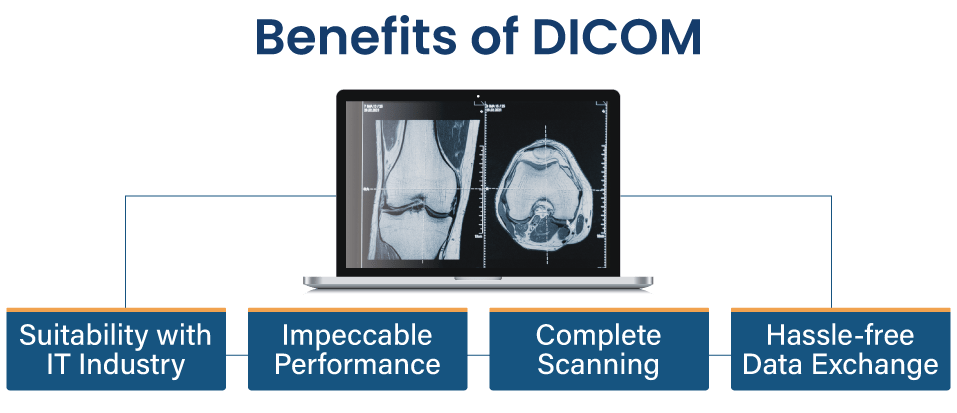
DICOM is a standard international protocol for medical data exchanges. It enables the presentation of data in a particular file format that people can understand. Many benefits separate DICOM from PACS. The most important part is it can convert the CT, MRI, X-ray, and Ultrasound data into readable ones. Other promising advantages that differentiate DICOM Viewers from Pacs are:
1. Suitability with the IT Industry
DICOM is best merged with the Information Technology (IT) sector. In 2010, digital pathology was deployed in the DCIM standards. This integration was accepted by all the healthcare providers. It allowed them to use digital pathology in their prevailing IT sector, moreover, without spending an extra penny.
2. Impeccable Performance
The extensions wherein the images are kept offer high performance whenever these are being utilized. The image with a higher resolution offers the highest data. Here supplement 145 works and recommends a consideration to keep the images in pathology and then maps sub-regions from the layers into the DICOM viewers.
3. Complete Scanning
Most scanners cannot capture the whole slide of the images, and these are specifically maintained under DICOM standards. It allows the scanners to avoid the uncaptured area and make small-size images.
4. Hassle-free Data Exchange
Interoperability is of great value for patients being transferred between hospitals or medical facilities. DICOM allows for the seamless sharing of medical data and reduces the risk of errors or delays in treatment. Thanks to DICOM, there is a hassle-free and secure exchange of medical image data between different healthcare information systems.
Read Also: Future Trends in DICOM and Medical Imaging Software Development
Benefits of PACS
PACS is a picture archiving and communication system. It helps to safely store, manage, and analyze medical images and reports improving disease diagnosis and treatment.
Professional radiologist utilizes PACS to save all their medical diagnostic files. The data is also shared with the respective medical team. It is accessible at any point in time, people can search through the information and retrieve the images as well.
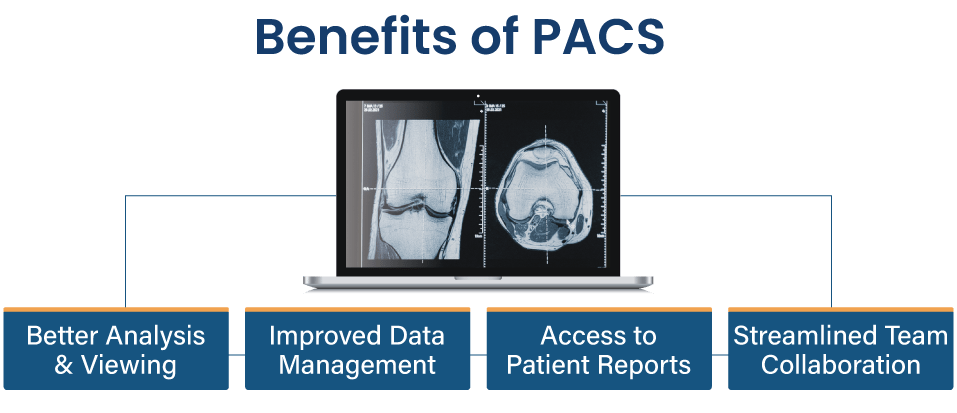
Experts identify image storage and management as one of PACS’s major benefits. Healthcare professionals use these images to assess patient health, review medical records, and monitor clinical conditions. PACS also lets authorized users access medical imaging data from virtually anywhere. Here’s a look at some of the key benefits of PACS:
1. Better Analysis & Viewing
The technology facilitates the radiologist to view the digital images by zooming in and getting a closer aspect of the health conditions. It also ensures that the radiologist can manipulate the image. It then helps in better viewing and analysis which ultimately helps in a better diagnosis of the problem.
2. Improved Data Management
One more addon while using PACS is it facilitates magnificent data management efficiency. It reduces an imperative count of duplicate images, it keeps a record of all the previous data electronically.
3. Access to Patient Reports
The best part of PACS is it provides quick access to patient images and reports. It enables tests to be conducted flawlessly and anywhere. Simultaneously, the outcomes can be shared electronically anywhere.
4. Streamlined Team Collaboration
PACS makes it easier for radiologists, doctors, and other healthcare professionals to collaborate more effectively, including integrating a DICOM viewer with a PACS server. Patient data and medical pictures can be shared back and forth seamlessly. Care communication and coordination is more timely and accurate. As a result, there is a significant improvement in patient care and outcomes.
Need a Custom DICOM Viewer or PACS Integration?
We build HIPAA-ready medical imaging software end to end.
See How We Build ItWhy This Matters for Healthcare IT Teams
Choosing DICOM-compliant imaging equipment and a well-integrated PACS isn’t just a technical checkbox — it directly affects diagnostic speed, interoperability with EHR/RIS systems, and compliance with data-exchange standards like HL7 and FHIR. AI is also increasingly enhancing DICOM medical imaging workflows, from auto-routing studies to flagging anomalies for radiologist review. (internal link added) Healthcare organizations evaluating a new imaging setup should confirm DICOM conformance statements from every device vendor and verify PACS integration before procurement.
Final Words
Undoubtedly, X-rays, CT Scanners, and MRIs have improved health care. These technologies collect enormous amounts of data. To be truly transformational, these data have to be stored and analyzed securely- which is where DICOM and PACS come into play.
Both DICOM and PACS play a critical role in handling and preserving medical pictures, although their roles are different, and both are key components of modern healthcare. Overall, DICOM and PACS provide invaluable contributions to the healthcare industry and have revolutionized how medical data is stored, shared, and analyzed.
Get a Free Consultation on Your Imaging Project
Tell us your requirements — we’ll respond within one business day.
Get a Free Consultation TodayFAQs
DICOM is the standard that formats and transmits medical images. PACS is the system that stores, retrieves, and displays those images. DICOM is the language; PACS is the library that uses it.
DICOM stands for Digital Imaging and Communications in Medicine — the global standard for exchanging medical imaging data like X-rays, CT, and MRI scans.
PACS (Picture Archiving and Communication System) is the software radiologists use daily to store, pull up, and compare a patient’s imaging studies without physical film.
No. PACS relies on the DICOM standard to receive, store, and share images with imaging devices and other healthcare systems.
A DICOM image is a medical scan (X-ray, CT, MRI, ultrasound) saved in the DICOM file format, which bundles the picture with patient and scan metadata.
No. While most common in radiology, both are also used in cardiology, dermatology, digital pathology, and other imaging-heavy specialties.
Imaging devices generate scans in DICOM format, and PACS receives, indexes, and stores those DICOM files so they can be retrieved and viewed anywhere on the network.